What to know before buying a firearm includes eligibility, state and federal law, intended use, safe storage, training, ammunition compatibility, total cost, and the practical fit of the firearm. A responsible purchase begins with legal verification and supervised instruction, not a model recommendation, because the wrong firearm can create avoidable safety, comfort, and compliance problems.
Key Facts at a Glance
A firearm purchase may require government identification, ATF Form 4473, a background check, and additional state permits or waiting periods.
Federal law generally sets 18 as the minimum age for an FFL transfer of a long gun and 21 for an FFL transfer of a handgun, while state law can be stricter.
A firearm, ammunition, and secure storage should be budgeted as one ownership decision, not as separate purchases.
A firearm should remain unloaded during initial handling, with the action open and the muzzle pointed in a safe direction.
Safe storage means preventing unauthorized access, including access by children, visitors, roommates, and prohibited people.
A qualified instructor and a supervised range session are more useful than online reviews for evaluating fit, recoil, controls, and handling.
What Should You Decide Before Buying a Firearm?
Before buying a firearm, decide the lawful purpose, who may access it, where it will be stored, and how you will train. Home protection, hunting, target shooting, collecting, and concealed carry impose different requirements, and a firearm that fits one purpose can be unsuitable for another.
Write the purpose in one sentence. “Occasional target practice at a club” leads to different choices from “hunting deer in wooded terrain” or “lawful concealed carry.” Also identify practical constraints: hand strength, eyesight, hearing, dominant hand, clothing, storage location, local range rules, and whether another adult in the household is comfortable with firearm ownership.
A firearm is not a substitute for an emergency plan. For a home, that plan can include locked doors, lighting, an alarm, emergency contacts, evacuation routes, and communication with household members. A firearm introduces responsibilities even when it is never fired.
What questions should a first-time buyer answer?
Use these questions before visiting a dealer:
- What is the primary lawful purpose?
- Will the firearm be stored at home, transported, carried, or used for hunting?
- Who can access the storage container?
- What state, county, or municipal rules apply?
- Can you afford training, a lockbox or safe, ammunition, maintenance, and range fees?
- Can you safely operate the controls without excessive force?
- Can you commit to recurring practice and periodic inspection?
- What is the plan if you later decide you no longer want it?
Who Can Legally Buy a Firearm?
A buyer must satisfy federal eligibility rules and every applicable state and local requirement. For a transfer by a Federal Firearms Licensee, federal law generally requires the buyer to be at least 18 for a rifle or shotgun and at least 21 for a handgun, but state law may impose higher ages, permits, training, registration, or waiting periods.
The buyer completes ATF Form 4473 and certifies answers under penalty of perjury. The dealer generally contacts the FBI National Instant Criminal Background Check System, or NICS, unless a qualifying state point-of-contact system applies. A check may return Proceed, Denied, or Delayed. A delay is not an approval.
Federal prohibited categories include certain felony convictions, fugitives, unlawful users of controlled substances, people subject to qualifying domestic-violence restrictions, and some people adjudicated as a mental defective or committed to a mental institution. The legal details contain definitions and exceptions, so a person with any potentially disqualifying history should obtain advice from a qualified firearms attorney before attempting a purchase.
Does every firearm transfer require an FFL?
No. Federal law treats dealer sales and private transfers differently, although state law can require an FFL for more transactions. A private seller generally may not transfer a firearm directly to a resident of another state; the firearm normally must go to an FFL in the recipient’s state, where the dealer completes the required process.
An online listing does not eliminate the legal process. In a typical interstate transaction, the seller ships to the recipient’s local FFL, and the recipient completes the dealer’s paperwork and background-check procedure. Confirm the receiving dealer’s fees, identification requirements, waiting period, and acceptance of that type of firearm before paying.
What are the common paperwork mistakes?
| Mistake | Why it matters | Safer action |
|---|---|---|
| Using an expired or incorrect address on identification | The dealer may be unable to complete the transfer | Confirm acceptable documents with the FFL before visiting |
| Guessing on Form 4473 answers | A false answer can create criminal exposure | Stop and obtain qualified legal advice |
| Assuming a NICS delay means approval | State law or dealer policy may require more time | Ask the dealer what outcome permits transfer |
| Ignoring state permits or waiting periods | Federal approval does not override state law | Check the state police or attorney general website |
| Buying for an undisclosed recipient | The transaction may be an unlawful straw purchase | Do not purchase on another person’s behalf |
| Taking possession before checking local rules | Transport, magazine, feature, or registration rules may apply | Verify possession and transport requirements first |
How Does a Firearm Work?
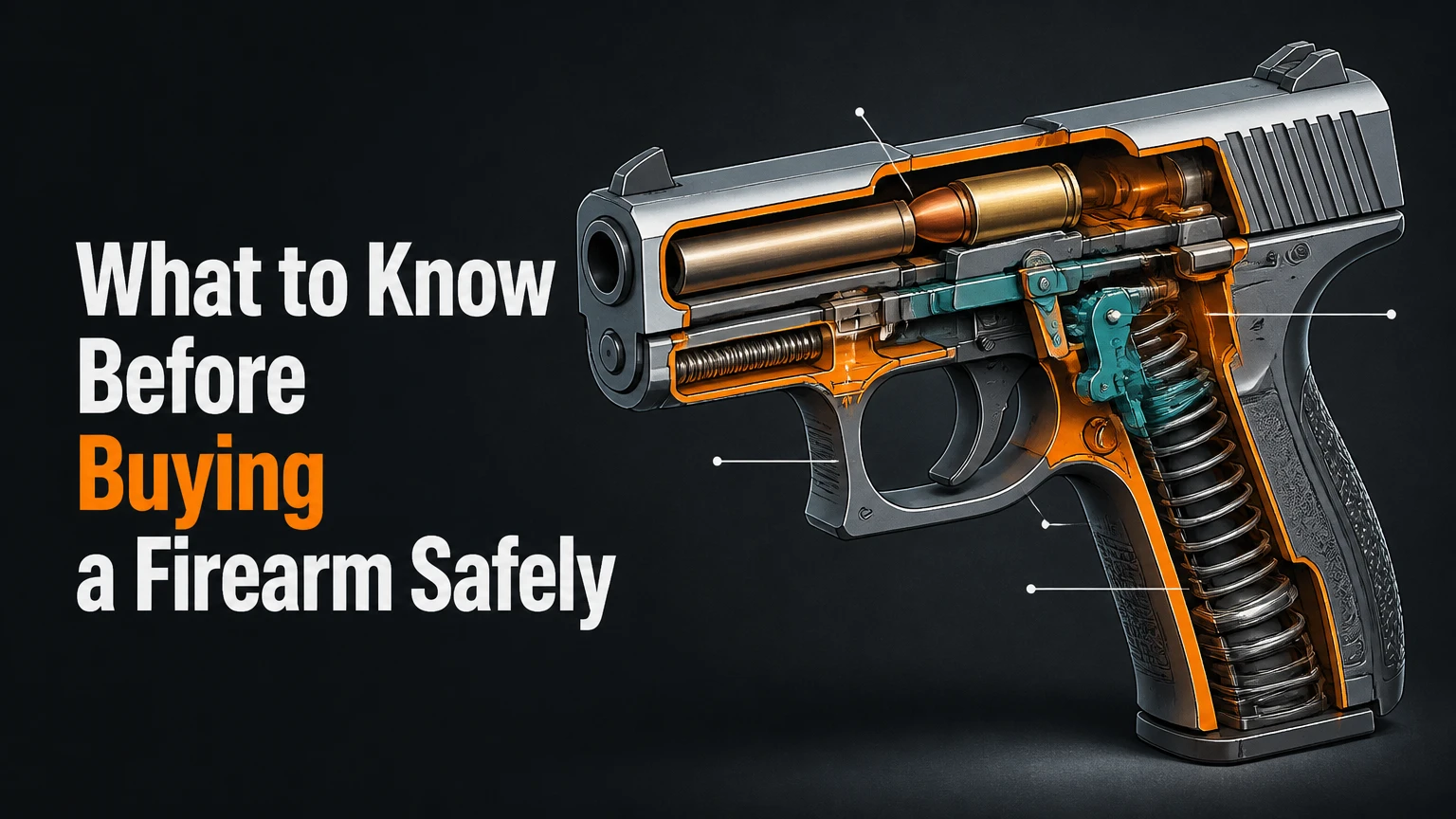
A modern firearm uses expanding propellant gas to propel a projectile through a barrel, while the action contains pressure and may prepare the firearm for another shot. In a repeating firearm, the operating sequence commonly includes feeding, chambering, locking, firing, unlocking, extraction, ejection, and cocking.
A cartridge contains a case, primer, propellant, and projectile, although shotgun ammunition uses a shotshell construction with a hull, primer, powder, wad, and shot or slug. The trigger initiates the firing mechanism, but the exact sequence varies by action type. A revolver rotates a cylinder; a bolt-action rifle uses a manually operated bolt; a semi-automatic action uses fired energy to cycle the action.
Mechanics matter because every design creates different handling tasks. A buyer should learn the specific firearm’s manual, loading status indicators, controls, ammunition limits, and safe unloading procedure from an instructor rather than relying on a generic video.
What is the regulated part of a firearm?
Under federal law, the frame or receiver is generally the serialized component legally treated as the firearm. ATF regulations and definitions have changed over time, and some partially complete or privately made components may fall under specific rules depending on their design and condition.
The serial-numbered part is not necessarily the only component that creates legal obligations. State law may regulate unfinished receivers, privately made firearms, transfers, markings, or possession. Never assume that an unassembled component is legally unrestricted because it lacks a barrel or stock.
Which Firearm Type Fits the Intended Use?
The best firearm type is the one that meets the lawful purpose while the user can control, store, transport, and maintain it consistently. Handguns are compact but demand more training for accurate handling; rifles often provide easier sighting and lower practical recoil; shotguns add ammunition and recoil considerations that many first-time buyers underestimate.
| Type | Typical purchase price | Typical training consideration | Common limitation |
|---|---|---|---|
| Full-size handgun | $400-$900 | Requires repeated grip and trigger practice | Difficult to use safely without structured instruction |
| Compact handgun | $400-$1,000 | Greater emphasis on recoil control and concealment | Shorter sight radius and sharper recoil |
| Bolt-action rifle | $350-$1,200 | Manual action and steady shooting fundamentals | Slower operation for follow-up shots |
| Semi-automatic rifle | $500-$1,500 | Safe loading, unloading, and action operation | State restrictions may affect configuration |
| Pump-action shotgun | $300-$900 | Recoil management and complete cycling | Short-cycling and heavy recoil can cause problems |
| Semi-automatic shotgun | $700-$2,000+ | Ammunition-specific function testing | Higher cost and possible sensitivity to light loads |
Is a handgun or long gun easier for a beginner?
A long gun is often easier for a beginner to hold steadily because the stock provides multiple contact points, but ease depends on physical fit, recoil, hearing protection, and instruction. A small handgun is not automatically easier because its short grip, short sight radius, and low weight can make recoil and trigger control more demanding.
For recreational learning, a properly fitted .22 LR rifle or handgun can reduce ammunition cost and recoil, although the learner must still use full safety procedures. A .22 LR firearm is not automatically suitable for every defensive or hunting purpose, and ammunition performance, reliability, and local rules still matter.
What should you compare during a range rental?
| Comparison factor | Practical test | Warning sign |
|---|---|---|
| Grip fit | Reach the trigger without shifting the hand | Finger placement requires an unsafe grip |
| Recoil | Fire a supervised, limited string with proper protection | Flinching, pain, or loss of muzzle control |
| Controls | Operate them with the instructor’s unloaded demonstration | Confusion about loaded and unloaded status |
| Sights | Align them without straining the neck or eyes | Sight picture remains inconsistent |
| Weight | Hold the firearm in the approved position | Trembling develops quickly |
| Maintenance | Review manufacturer instructions and field-service requirements | Cleaning steps are unclear or inaccessible |
What Caliber and Ammunition Issues Matter?
The firearm’s chamber marking must match the ammunition designation exactly, including distinctions such as 9mm Luger versus other 9mm cartridges or .223 Remington versus 5.56 NATO. Never rely on appearance, a shop label, or a cartridge that seems close enough; use the firearm manufacturer’s manual and chamber marking.
Caliber affects recoil, ammunition price, availability, purpose, and sometimes firearm size. A cartridge with greater energy can increase blast and recoil, while a cheaper cartridge can support more frequent supervised practice. Shotgun buyers must also match gauge, shell length, shot type, and chamber specification.
What ammunition should you budget for?
Typical range ammunition budgets vary widely, but a new owner may spend $100-$300 on initial practice ammunition, depending on caliber and session length. Defensive, hunting, and specialty ammunition can cost more than basic target ammunition, and a firearm may require function testing with the specific load under safe range conditions.
Do not buy large quantities before confirming function, storage capacity, and local rules. Keep ammunition cool, dry, clearly labeled, and physically separated from unauthorized users. Never mix loose cartridges in an unlabeled container.
How Much Does Firearm Ownership Really Cost?
A realistic first-year firearm budget is often $800-$2,000 beyond the firearm’s sticker price, depending on the storage method, training schedule, accessories, and ammunition. The largest overlooked expense is usually secure storage, followed by instruction and recurring practice.
| Ownership item | Typical entry range | Timing |
|---|---|---|
| Firearm | $300-$1,500 | Initial purchase |
| Lockbox or basic safe | $80-$800 | Before bringing firearm home |
| Eye and ear protection | $30-$150 | First range visit |
| Initial training | $75-$300 | Before independent handling |
| Cleaning and maintenance supplies | $25-$100 | Initial setup |
| Practice ammunition | $100-$300 | First several sessions |
| Range fees | $15-$40 per visit | Recurring |
| Secure transport case | $25-$150 | Before transport |
The firearm price does not predict suitability by itself. A more expensive model can still be a poor choice if its grip, controls, recoil, or maintenance requirements do not fit the user.
Should you buy new or used?
A used firearm can reduce purchase cost, but the discount is worthwhile only when a qualified dealer or gunsmith can inspect it. Check the serial number, barrel condition, sights, controls, magazines, corrosion, replacement parts, safety function, and whether the model has unresolved recalls.
Do not accept a used firearm with an unclear history, altered serial number, damaged chamber, excessive corrosion, or improvised modifications. Ask about the return policy before completing the transfer because firearms often cannot be returned after a background check and transfer.
What Is the Safest Purchase Process?
The safest purchase process has eight stages: define the purpose, verify the law, take an introductory class, compare suitable types, handle or rent examples, confirm ammunition and storage, complete the dealer process, and schedule follow-up practice. Legal compliance and safe storage should be settled before possession.
- Define the use. Record the intended activity, users, storage site, and transport needs.
- Check official requirements. Use ATF resources and the relevant state police, attorney general, or licensing agency.
- Choose an instructor. Prefer a recognized instructor who teaches safe handling before live fire.
- Visit a reputable FFL. Ask about total price, transfer fees, returns, warranties, permits, and waiting periods.
- Handle unloaded examples. Keep the muzzle in a safe direction and follow staff instructions.
- Confirm the ammunition. Read the chamber marking and manufacturer’s manual.
- Prepare storage. Have a locked container and access-control plan ready before pickup.
- Complete the transfer. Review Form 4473 carefully, follow the check outcome, and obey state procedures.
- Book supervised practice. Learn the exact model’s loading, unloading, cleaning, and malfunction procedures.
A dealer should be willing to slow down. Pressure to buy immediately, dismissive answers about storage, or vague responses about legality are reasons to leave.
How Should You Store and Transport a Firearm?
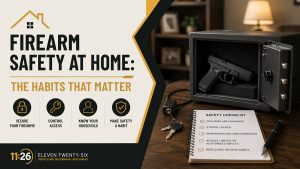
A firearm should be unloaded, locked, and inaccessible to unauthorized people whenever it is not under the immediate control of a trained, legally authorized user. The storage method should address children, visitors, roommates, theft, fire, and the possibility that a prohibited person could access the home.
A lockbox can support quick authorized access, while a larger safe can provide stronger theft and access resistance. The correct choice depends on the household, but a loaded firearm hidden in a drawer is not secure storage. Store keys, combinations, and biometric access credentials so children and unauthorized adults cannot use them.
For transport, follow federal, state, destination, and carrier rules. Requirements can address unloaded status, locked containers, ammunition separation, vehicle placement, interstate travel, and notification. The federal Firearm Owners’ Protection Act has limited interstate safe-passage protections, but it does not erase every state or local restriction.
What should households discuss first?
Households should agree on who may handle the firearm, where it will remain stored, what to do during emergencies, and how visitors will be kept from access. Children should receive age-appropriate safety education, but education does not replace locked storage.
Project ChildSafe summarizes the central responsibility as: “Treat every firearm as if it is loaded.” That rule supports, but does not replace, a locked-storage system and direct supervision.
What Training Does a New Owner Need?
A new owner should complete an introductory safety class before independent handling and then receive model-specific instruction before live practice. Training should cover the four basic safety rules, loading and unloading, grip or shoulder position, sight alignment, trigger control, storage, transport, cleaning, and what to do when something appears abnormal.
The exact course depends on the purpose. A hunting student may need hunter education and field-safety training; a concealed-carry applicant may need state-approved instruction, legal education, and recurring practice; a recreational shooter needs range rules and fundamental marksmanship.
How should you respond to a malfunction?
If a firearm fails to fire, sounds unusual, shows an obstructed barrel, or behaves unexpectedly, keep the muzzle pointed in a safe direction, keep your finger away from the trigger, and ask the range officer or instructor for help. Do not improvise a clearing procedure from memory.
Different stoppages require different responses, and a damaged or obstructed firearm can create a serious hazard. Manufacturer manuals, certified instructors, and range officers can teach the appropriate procedure for the exact model. If there is a suspected squib load, do not fire another cartridge until a qualified person checks the barrel.
What Mistakes Should Buyers Avoid?
The most serious first-purchase mistakes involve legal assumptions, insecure storage, poor fit, and buying equipment before receiving instruction. These errors can create criminal liability, preventable injuries, wasted money, or a firearm that remains unused because it is uncomfortable to operate.
- Straw purchasing: Do not buy for another person while concealing the actual recipient or helping a prohibited person obtain a firearm.
- Assuming a permit is unnecessary: State requirements can change and may apply before purchase, possession, or carry.
- Choosing the smallest handgun: Low weight often increases felt recoil and reduces control.
- Ignoring hearing protection: Firearms can cause permanent hearing damage; use properly fitted ear protection and eye protection.
- Buying incompatible accessories: Holsters, magazines, optics, and ammunition must fit the exact model and specification.
- Skipping a safe: A cable lock alone may not address theft, unauthorized access, or household needs.
- Using a mechanical safety as the main safeguard: A safety lever cannot control muzzle direction, trigger-finger placement, or unauthorized access.
- Treating online confidence as training: Watching a demonstration does not verify that a buyer can operate the specific firearm safely.
One practitioner rule is simple: if a buyer cannot explain how the firearm is stored, transported, unloaded, and inspected, the buyer is not ready to take possession.
Which Firearm Fits Common Situations?
No single firearm is best for every lawful use. A recreational beginner may benefit from a low-recoil training firearm, while a hunter needs a legal and ethical hunting setup, and a concealed-carry applicant must evaluate training, local law, concealment, and secure storage together.
| Situation | Starting direction | What to verify | What it is not good for |
|---|---|---|---|
| Recreational learning | Properly fitted .22 LR firearm | Range rules, ammunition availability, instructor access | Replacing purpose-specific defensive or hunting equipment |
| Deer hunting | Legal hunting rifle or shotgun | Season rules, game caliber, hunter education | Indoor practice or concealed carry |
| Home protection planning | Securely stored, controllable firearm after training | Safe access plan, household agreement, backdrop awareness | Eliminating the need for emergency planning |
| Concealed carry | State-compliant, controllable handgun | Permit rules, holster safety, recurring practice | Casual carrying without legal and practical preparation |
| Collection | Firearm selected for historical or technical interest | Provenance, condition, parts, storage | Assuming collectible value equals functional reliability |
What is the honest limitation of general recommendations?
General recommendations cannot account for a person’s hand size, strength, medical limitations, household, local law, or access to training. A named model or caliber recommendation without that context is incomplete, especially for defensive use where safe handling and accurate decision-making matter more than marketing specifications.
Frequently Asked Questions
Do I need a license to own a firearm?
Federal law does not create one universal ownership license for every individual firearm owner, but states and local jurisdictions may require permits, purchaser identification cards, registration, training, or licensing. A carry license is different from a purchase requirement. Check the current rules for the state where you live and the state where the firearm will be possessed.
Can I buy a firearm online and have it shipped to my home?
An interstate online purchase normally must be shipped to an FFL in the buyer’s state, where the required transfer process occurs. Direct shipment to a private residence is generally not the normal lawful route for a dealer sale. Confirm the receiving dealer’s fees, identification requirements, and state restrictions before ordering.
What identification is usually required?
An FFL generally needs government-issued identification showing the buyer’s current residence, although acceptable combinations vary when an address has recently changed. A passport may establish identity but not always current residence by itself. Ask the dealer which documents are accepted before completing the transaction.
How long does a firearm background check take?
Many NICS checks return quickly, but a delay can require additional research, and state waiting periods can extend the time before pickup. Federal default-transfer rules and dealer policies do not override stricter state requirements. A buyer should ask the FFL for the expected timeline rather than relying on a fixed number of minutes or days.
Is a revolver safer than a semi-automatic pistol?
Neither design is automatically safer. Safety depends on training, mechanical condition, trigger discipline, muzzle control, storage, and the user’s ability to operate that specific firearm. A revolver may have fewer operating controls, while a semi-automatic pistol may offer different ergonomics and capacity; supervised handling should determine fit.
What should I do if I change my mind after buying?
Keep the firearm secured and do not attempt an informal handoff. Contact the selling dealer, a local FFL, or a qualified attorney about lawful return, transfer, consignment, or surrender options. Do not transport or transfer it until you understand the applicable state, federal, and destination rules.
The Bottom Line
What to know before buying a firearm is broader than choosing a model. Verify eligibility and local law, define the lawful purpose, compare fit and recoil under supervision, confirm ammunition compatibility, budget for training and secure storage, and complete the transfer through the correct legal channel. The right first purchase is the firearm you can operate, store, transport, and maintain safely and lawfully.