Most people will never fire a gun in self-defense. Almost everyone will someday face a moment where someone needs help before help arrives: a choking child, a collapsed coworker, a cardiac arrest in the grocery store. CPR and first aid training is the skill set for those moments, and the Eleven Twenty Six Elite Training Academy lists it alongside the firearms courses. The connection makes sense: responsibility is responsibility.
The Chain of Survival
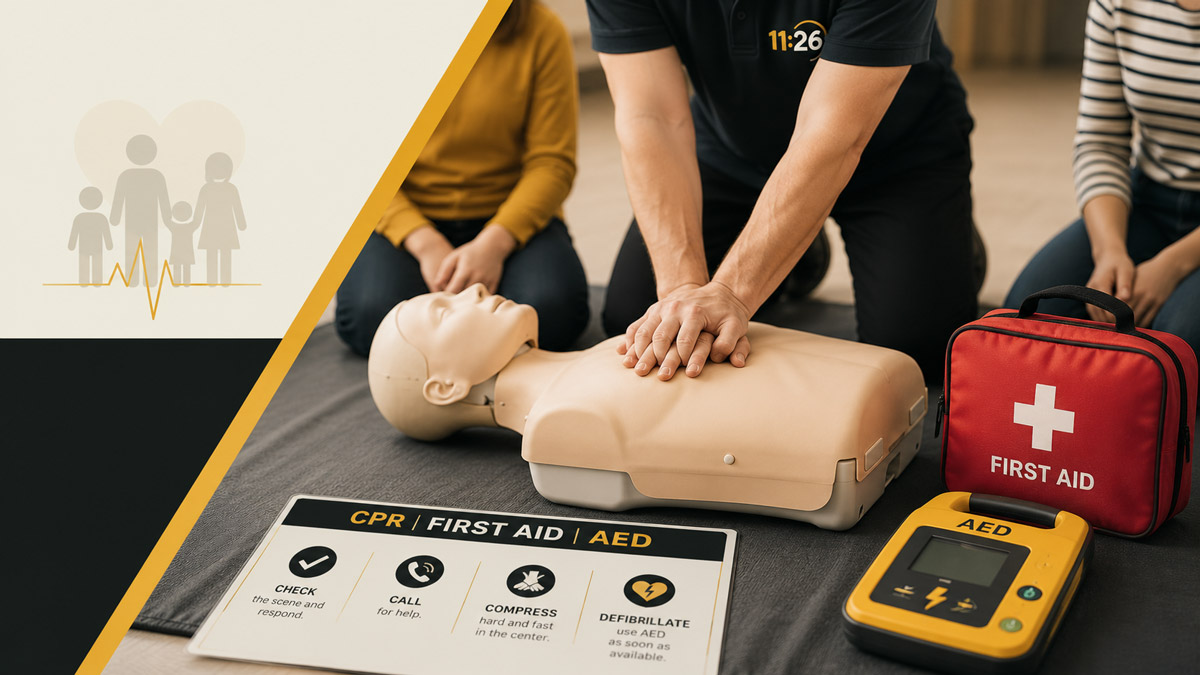
Emergency care follows a chain, and every link depends on the one before it. Early recognition, early CPR, early defibrillation, and early advanced care. The bystander is the first link, because the bystander is there when it happens. The academy’s CPR, First Aid, and AED course trains that first link: recognizing the emergency, starting CPR, and using the defibrillator that more and more buildings carry.
The Hands-On Difference
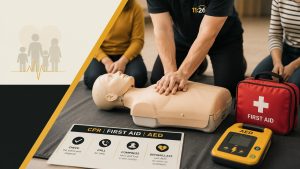
CPR cannot be learned from a video. The compression depth, the rhythm, the hand position, and the rotation between rescuers are physical skills, and they are built by doing. The academy’s course is described on the official site as hands-on training and certification, which is exactly what makes it work. The student practices on the manikin until the motion is automatic, because in the real moment there is no time to think about the technique.
The AED Question
Automated external defibrillators are in schools, gyms, airports, and workplaces, and they are designed to be used by anyone who has been trained. The training removes the hesitation: how to open the device, follow the prompts, and place the pads. The AED is the link that turns a cardiac arrest survival story into a real outcome, and the hands-on practice makes the device familiar instead of frightening.
First Aid Beyond the Chest
The course covers more than cardiac care: bleeding control, choking response, and the first aid basics that apply to everyday accidents. A stopped bleed is the skill that matters in everything from a kitchen knife accident to a range mishap to a car crash. The academy’s flyer materials also list blood borne pathogens, which is the knowledge side of the same responsibility: how to help without risking infection.
The Workplace Value
For workplaces, the training is both practical and regulatory. A team with certified responders is a team that can act in the first minutes of an emergency, and the certification is the documented version of that readiness. The academy trains groups, which means the whole team learns together and the plan includes who responds first.
The Family Value
For families, the value is personal. The parent who knows CPR and first aid is the parent who can act when the child chokes or the grandparent collapses. The skills are the ones nobody wants to need and everybody should have. The training belongs on the family list for the same reason the safety training does: the moment comes without warning, and preparation is the only answer.
The Academy Connection
The academy’s catalog pairs the medical training with the firearms training because they are two sides of the same responsibility. The shooter who trains for self-defense should also train for the aftermath, and the parent who secures the firearm should also know how to respond to any emergency. The 4.9 rating on the listing is the record of an academy that treats the whole responsibility as the product.
The Certification Habit
Certification expires, and the honest plan includes the renewal. The skills stay sharpest when they are practiced, and the re-certification is the reminder to practice them. The academy’s course covers the current standards, and the renewal conversation is part of the catalog. The family or workplace that schedules the renewal is the one that keeps the first link of the chain strong.
The Everyday Version
Most uses of first aid training are not dramatic: the kitchen burn, the fall in the driveway, the allergic reaction at the family dinner. The course builds the skills for the everyday moments as well as the emergencies, which is why the training belongs on every family’s list. The skills are the ones nobody wants to need and everybody should have, and the everyday version is where they get used most.
The Takeaway
CPR and first aid training is the skill set for the moments that matter most, and it is hands-on, certified, and built for real use. The course turns a bystander into the first link in the chain of survival. That is a skill worth having long before it is needed.
Related Reading
- Firearm safety at home
- Your first concealed carry class
- Active shooter response: preparation over fear
Call about a CPR class to the academy.