Active shooter safety tips center on three options: run from danger when a safe route exists, hide behind a locked or barricaded barrier when escape is unsafe, and fight only as a last resort during an imminent life-threatening attack. Your best decision depends on the shooter’s location, your route, barriers, companions, and changing information.
Key Facts at a Glance
An active shooter is a person actively engaged in killing or attempting to kill people in a populated area.
Run, Hide, Fight is a decision framework, not a rigid sequence that must be followed in order.
Cover can reduce exposure to bullets; concealment only blocks visibility and may not stop bullets.
Leave belongings behind, keep hands visible, and follow every law-enforcement command.
A commercial bleeding-control kit typically costs $50-$150, but training determines whether it is useful.
Incident duration and police arrival times vary widely, so waiting for responders is not a complete personal safety plan.
What Is an Active Shooter?
The U.S. Department of Homeland Security defines an active shooter as “an individual actively engaged in killing or attempting to kill people in a confined and populated area.” The term describes an ongoing threat, not a particular motive, weapon, location, or victim profile.
The FBI uses the related term “active shooter” for situations involving one or more people actively killing or attempting to kill people in a populated area. Some incidents involve firearms, while others involve edged weapons, vehicles, or multiple attackers. Your response should follow the immediate threat and available escape routes rather than assume every incident looks the same.
An active shooter event differs from a general emergency because the danger may move through a building, change direction, or stop before officers arrive. Fire alarms, public-address announcements, text alerts, and rumors may conflict. Treat credible sounds, visible danger, and official instructions seriously, but do not delay an immediate escape while trying to identify the attacker.
What Should You Do First?
When violence begins, move away from the threat, create distance, and choose the safest available option without waiting for a perfect assessment. The first useful questions are: Where is the danger? Can I reach a safer location now? Is the route exposed? Can a nearby room be secured?
Use this rapid decision process:
- Identify the direction of danger. Use sounds, crowd movement, announcements, and visible conditions, while avoiding attempts to investigate.
- Look for the nearest safe exit. Consider doors, stairs, emergency exits, and routes that do not lead toward the threat.
- Run if the path is reasonably safe. Leave bags and other objects behind.
- Hide if escape would expose you to the attacker. Lock, barricade, silence, and move out of view.
- Resist only during an imminent attack. Fighting is a last resort when running and hiding cannot protect you.
- Call emergency services when safe. Give the location, direction of travel, description, weapons if known, and injured-person information.
The FBI’s public guidance summarizes the framework as “Run. Hide. Fight.” The framework supports rapid choices under uncertainty; it does not require someone to run first if hiding is immediately safer.
How Does Run, Hide, Fight Work?
Run, Hide, Fight works because it converts a confusing emergency into three response options based on distance, barriers, and escape conditions. The safest option can change as the attacker moves, a door locks, an exit clears, or law enforcement enters.
| Condition | Preferred action | Immediate priority | Main limitation |
|---|---|---|---|
| Safe route away from threat | Run | Create distance and exit | Route may become exposed |
| No safe route, secure room nearby | Hide | Lock, barricade, silence | Barrier may not stop bullets |
| Attacker enters your location | Fight | Disrupt the attack and escape | High risk and physical demands |
| Law enforcement arrives | Comply and evacuate | Empty hands and follow commands | Officers may pass injured people initially |
Run: How do you evacuate safely?
Run when an accessible route takes you away from the threat and does not require crossing an exposed area. Move quickly, leave belongings behind, encourage nearby people to follow, and do not allow another person’s hesitation to trap you in danger.
Warn people you encounter not to enter the threatened area, but do not stop to debate, collect property, or return for someone after reaching safety. Use stairs rather than elevators when practical, because elevators can stop, open near danger, or lose power.
Keep your hands empty and visible. Do not hold a phone, backpack, weapon, or other object toward responding officers. Once outside, continue moving away from the building and avoid gathering near doors, windows, or emergency vehicle access lanes.
When is hiding safer than running?
Hiding is safer when the attacker is between you and a viable exit, the route crosses the attacker’s likely path, or a nearby room offers a lockable, barricadable barrier. A hiding place should remove you from view and add distance or solid material between you and the threat.
Lock the door immediately. Use heavy furniture to delay entry when the room’s layout permits, and avoid opening the door for knocks, voices, or requests unless authorized officials provide a verified instruction. Silence phones completely, including vibration, alarms, and notification sounds. Turn off visible screens and lights if doing so does not expose your position.
Spread people through the room rather than clustering beside the door. Stay low only when that improves concealment or reduces exposure, and avoid windows, glass panels, open corridors, and thin partitions.
How can you make a hiding place safer?
A safer hiding place combines concealment, a physical barrier, distance from the entry point, and a way to communicate silently. Thick concrete, structural columns, masonry, and substantial building components generally provide more protection than drywall, hollow doors, office furniture, or vehicle doors.
| Location or object | Visibility protection | Bullet protection | Practical use |
|---|---|---|---|
| Concrete structural column | High | Often substantial | Move behind it in an open venue |
| Masonry interior wall | High | Potentially substantial | Use the side away from the threat |
| Drywall partition | High | Low | Concealment only, not reliable cover |
| Hollow office door | Moderate | Low | Lock and barricade, then move away |
| Engine compartment | Moderate | Higher than vehicle doors | Use only when no safer structure exists |
Do not improvise complicated door mechanisms that could fail, injure someone, or prevent your own escape. A belt or cable may delay a door in some configurations, but a locked door, heavy furniture, and distance from the entry point are usually simpler. Follow your facility’s tested procedures rather than relying on a device learned during an emergency.
When is fighting the only remaining option?
Fight only when an attacker is entering your location or attacking you and escape or hiding cannot protect you. The goal is immediate disruption that creates an opportunity to escape, not pursuit, capture, or investigation.
Commit to loud, coordinated resistance if other people are present and a safe opportunity exists. Use nearby heavy or rigid objects as improvised defensive tools, act together when possible, and stop moving toward danger once an escape route opens. Do not attempt to retrieve a weapon, chase an attacker, or continue a confrontation after the immediate threat has passed.
Fighting carries a high risk of severe injury. No training course can guarantee a safe outcome, and untrained people should not be expected to perform a particular maneuver. The decision belongs to the person facing the immediate threat.
What Happens When Law Enforcement Arrives?
When law enforcement arrives, keep empty hands raised or visible, spread your fingers, avoid sudden movements, and follow commands immediately. Officers may move past injured people to locate the attacker, so do not block, grab, or physically direct them.
| Action | Recommended behavior | Avoid |
|---|---|---|
| Hands | Empty, visible, fingers spread | Holding a phone or bag overhead |
| Movement | Slow, deliberate, directed | Running toward officers |
| Communication | Answer briefly when asked | Shouting competing instructions |
| Evacuation | Use the route officers indicate | Stopping in doorways |
| Identification | Provide information when safe | Pointing toward people or objects |
Place objects on the ground before approaching officers if you can do so without a sudden movement. Expect officers to separate, search, or temporarily restrain people while they establish control. Follow medical personnel’s instructions after the threat area is secured.
What Changes in Open Areas and Special Situations?
Open venues require immediate movement toward substantial structure, a distant exit, or a route outside the attacker’s line of sight. Cafeterias, malls, theaters, stadium concourses, and parking lots often contain more concealment than cover, so a table, merchandise display, or vehicle door may not stop bullets.
Open areas, vehicles, and elevators
In a parking lot, move away from the building and use substantial structural cover if an exit path is unavailable. Vehicle engine compartments offer more protection than doors or windows, but they are not dependable ballistic protection and should not replace reaching a safer structure.
Do not use an elevator during an unfolding attack unless emergency personnel direct you to do so. An elevator may stop at a threatened floor or trap occupants during a power failure. Use stairs and emergency exits when the route is safe.
Children, older adults, and people with disabilities
Plan assistance before an emergency by identifying accessible exits, refuge areas, mobility equipment, communication needs, and who will help each person. During an attack, do not abandon someone without assessing whether moving together is safer, but do not allow an impossible rescue attempt to trap additional people.
Parents and caregivers should use short, direct instructions such as “follow me,” “stay low,” or “quiet now.” Children may freeze or hide instead of responding to complex explanations, so age-appropriate practice should focus on recognizing trusted instructions and moving to a safe location.
Unclear alerts and conflicting instructions
A lockdown alert does not automatically mean every person should remain in place. Verify official information when time and safety permit, but visible danger or gunfire requires immediate action rather than prolonged phone research.
Never approach a suspicious person, open a secured door to check conditions, or enter an area another person is fleeing. Report information from a safe location through emergency services or the facility’s designated system.
How Should You Prepare Before an Incident?
Preparation should make the first decision easier without creating a false sense of protection. Know two ways out, understand how your workplace or school communicates emergencies, and identify rooms that can lock and be secured.
The Federal Emergency Management Agency recommends incorporating active-threat planning into broader emergency operations, including communications, reunification, accessibility, and recovery. Organizations should coordinate plans with local law enforcement, fire services, emergency medical services, employees, and people with disabilities.
Useful personal preparation includes:
- Locate two exits when entering unfamiliar public venues.
- Keep your phone charged and emergency contacts current.
- Learn whether your building uses a lockdown, shelter, or evacuation signal.
- Take an accredited bleeding-control course.
- Keep a compact first-aid or bleeding-control kit in an accessible location.
- Arrange family reunification through one out-of-area contact.
- Avoid posting unverified incident details publicly during the response.
What preparedness measures have the highest value?
Training, clear communication, tested access procedures, and bleeding control usually provide more dependable value than expensive personal armor. Ballistic panels and shields have specific limitations, require correct positioning, add weight, and may not protect the head, limbs, or people nearby.
| Measure | Typical cost | Typical implementation time | Important limitation |
|---|---|---|---|
| Bleeding-control kit | $50-$150 | 1-2 weeks to purchase | Requires training and replenishment |
| Two-hour staff briefing | $500-$2,500 | 2-6 weeks to schedule | Awareness does not equal practice |
| Stop the Bleed course | $0-$100 per person | 2-3 hours | Does not teach tactical response |
| Door and access review | $1,000-$10,000 | 2-8 weeks | Hardware cannot fix poor procedures |
| Mass notification system | $5,000-$50,000 | 1-6 months | Depends on power and contact accuracy |
These are typical planning ranges, not universal prices. Vendor estimates vary by building size, region, labor, technology, and code requirements. A facility should obtain a professional security and fire-code assessment before installing locks, glazing, or barricades.
What should a bleeding-control kit contain?
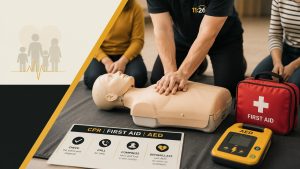
A practical kit commonly includes a commercial tourniquet, wound-packing gauze, pressure dressings, gloves, trauma shears, and a marker. The American College of Surgeons Stop the Bleed program teaches direct pressure, wound packing, and tourniquet use for life-threatening bleeding.
A tourniquet is not a substitute for emergency medical care. Call emergency services, apply pressure or a tourniquet according to training, note the application time, and do not remove it until medical professionals take over. Check expiration dates and inspect kits after drills or use.
How Should Organizations Prepare?
Organizations should combine prevention, physical security, emergency communication, response training, and recovery planning rather than rely on one lockdown drill. OSHA identifies workplace violence prevention as a management responsibility that includes hazard assessment, reporting procedures, training, and post-incident support.
| Organization | Planning priority | Practice frequency | Useful participants |
|---|---|---|---|
| Office | Lockable rooms and alert wording | At least annually | Employees, security, building manager |
| School | Classroom locks, reunification, accessibility | Per local policy | Staff, administrators, responders |
| Retail venue | Exit visibility and public messaging | Quarterly review | Managers, security, facilities |
| Healthcare site | Visitor control and clinical continuity | Quarterly or risk-based | Clinical, security, EMS |
| Event venue | Crowd movement and emergency access | Before major events | Venue staff, police, fire, EMS |
Avoid unannounced drills that simulate graphic violence or surprise vulnerable participants. Trauma-informed exercises explain objectives, provide opt-out routes, coordinate with mental-health professionals, and evaluate communication and accessibility. A drill that produces fear but fails to test door access, alert delivery, or reunification has limited safety value.
How Long Do Incidents and Police Responses Take?
There is no universal active shooter duration or average police response time that can safely predict an individual event. Some attacks end in minutes, while others involve multiple locations, barricades, or changing threats; rural travel times, building access, dispatch load, and attacker movement also vary.
The often-repeated 10-15-minute figure is a broad planning reference, not a countdown. Likewise, a claimed three-to-five-minute police response average should not guide personal decisions without a defined dataset, location, and measurement method. Run, hide, or fight decisions should be based on immediate conditions.
What Are the Most Common Mistakes?
The most dangerous mistakes are delaying action to confirm the threat, choosing concealment as if it were cover, and exposing yourself to verify a rumor or sound. People also commonly return for belongings, gather tightly behind one barrier, open locked doors for unknown callers, or approach officers while holding objects.
Use these corrections:
- Freezing: Name the nearest safe route and move as soon as credible danger appears.
- Crowding: Spread out within the room and stay away from the entry line.
- Thin concealment: Move behind substantial structure if a safer route exists.
- Door checking: Keep the door locked and rely on verified official instructions.
- Returning: Continue away from danger after escaping.
- Unclear communication: Give emergency dispatch the location, direction, description, and injury information from safety.
What Should You Do After Escaping?
After escaping, move to a designated safe area, call emergency services, provide factual information, and avoid reentering until authorities authorize it. Do not spread names, images, or unverified claims that could endanger people or interfere with an investigation.
Apply bleeding control only when the scene is reasonably safe and you have appropriate training. Record what you directly observed, preserve relevant clothing or objects when practical, and cooperate with investigators. Contact family through the designated reunification channel rather than traveling back toward the incident site.
Psychological effects may appear immediately or after days or weeks. Employers, schools, and families should provide access to trauma-informed counseling, practical leave, medical care, and privacy. Seeking support is a normal part of recovery, not evidence of weakness.
Frequently Asked Questions
Should I run or hide if I do not know where the shooter is?
Run if a route clearly takes you away from danger and does not expose you to likely movement paths. Hide if the route is uncertain, open, or close to the threat and a lockable room is immediately available. Reassess when reliable information changes, but do not investigate to obtain certainty.
Can a locked office stop bullets?
A locked office can delay entry and remove occupants from view, but most office doors and drywall are not reliable bullet-resistant barriers. Increase safety by locking the door, adding furniture when practical, moving away from the entry and windows, and choosing substantial structural cover if it is safely accessible.
Should I carry a tourniquet every day?
Carrying a commercial tourniquet can help during severe bleeding emergencies, especially when you have completed recognized training and keep the device accessible. A tourniquet cannot prevent an attack, replace emergency services, or guarantee correct treatment. Store it where others can find it and inspect it periodically.
What if someone refuses to evacuate?
Tell the person clearly that danger may be present, point toward the safe route, and continue if waiting would expose you. Do not physically restrain an adult or return into danger. For children, dependents, or people needing assistance, use the prearranged support plan and make the safest feasible decision.
Should a school use lockdown drills?
Schools should practice emergency procedures, but drills should be age-appropriate, announced when feasible, accessible, and trauma-informed. Exercises should test alert delivery, classroom communication, door function, reunification, and coordination with responders. Graphic simulations and surprise tactics can create harm without improving operational readiness.
The Bottom Line
Active shooter safety tips are most useful when converted into a simple, practiced decision: run through a safe route, hide behind a locked and barricaded barrier when escape is unsafe, and fight only during an imminent attack when no safer option remains. Keep hands visible for law enforcement, prepare bleeding-control skills, and follow verified official instructions after reaching safety.