Concealed carry training basics are the safety, firearm-handling, marksmanship, legal, and decision-making skills required to carry a handgun discreetly and responsibly. A compliant course may take 3-16 hours and may support a permit application, but certification alone does not create defensive proficiency; safe storage, supervised practice, conflict avoidance, and state-specific legal knowledge remain essential.
Key Facts at a Glance
A basic concealed carry course typically lasts 4-8 hours, although state mandates range from 3 to 16 hours.
Typical basic course tuition is $50-$150; advanced instruction commonly costs $175-$300 or more.
Online classroom training is legally accepted in some jurisdictions and rejected in others.
A complete budget may include ammunition, range fees, fingerprints, and a permit application, bringing a typical total to $100-$400.
A concealed carry permit proves completion of a required process, not mastery of drawing, movement, judgment, or stress management.
A rigid holster must fully cover the trigger guard, retain the firearm, and remain attached to the body during normal movement.
What Are Concealed Carry Training Basics?
Concealed carry training basics are the foundational lessons that connect firearm safety with lawful defensive decision-making. A responsible course normally covers safe handling, loading and unloading, storage, basic handgun operation, marksmanship, use-of-force principles, prohibited locations, and a live-fire qualification when state law requires one.
The phrase covers two related but different objectives. Permit training satisfies a government or licensing requirement. Defensive training develops repeatable skills for carrying safely, recognizing danger, avoiding escalation, and responding lawfully during a rapidly changing event. Many introductory classes address the first objective more thoroughly than the second.
The National Shooting Sports Foundation’s firearm safety guidance emphasizes that safe ownership begins with treating every firearm as loaded, keeping the muzzle pointed in a safe direction, and keeping the finger outside the trigger guard until ready to fire. Those rules apply during class, at home, in a vehicle, and on a range.
A basic course is therefore a starting point, not a graduation certificate from all future instruction. A student who has never handled a handgun may need an introductory class before a permit course, while an experienced shooter may need more work on legal judgment, concealment, and low-light decision-making.
What Does a Concealed Carry Course Teach?
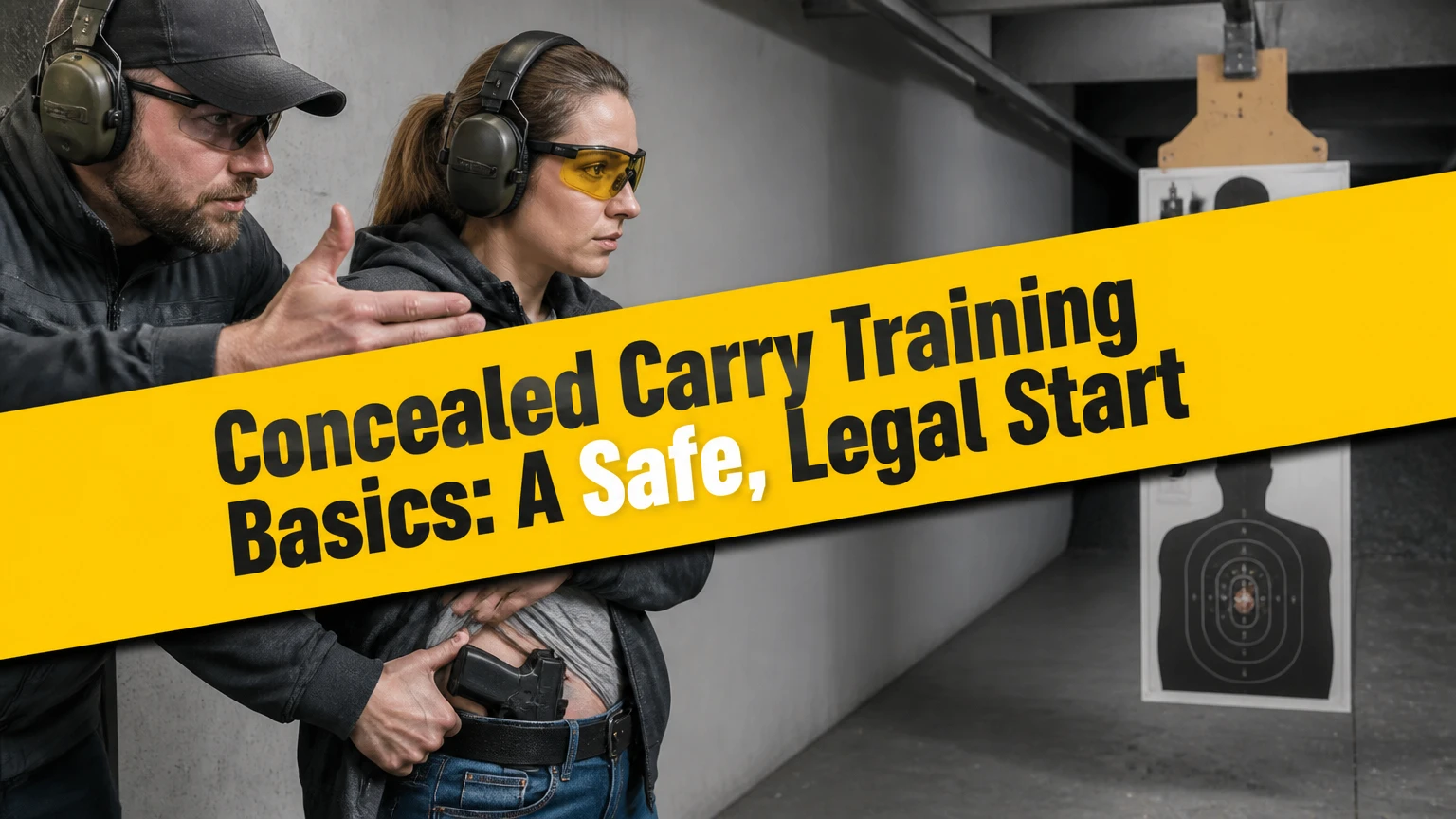
A concealed carry course usually combines classroom instruction with supervised handling and, where required, a live-fire evaluation. The classroom portion explains the law and responsibilities; the range portion checks whether the student can operate the firearm safely and meet a defined accuracy standard.
Core curriculum
A credible introductory course commonly includes:
- The four basic firearm safety rules
- Handgun parts, controls, ammunition, and operating cycle
- Safe loading, unloading, chamber checks, and administrative handling
- Grip, stance, sight alignment, trigger control, and recoil management
- Malfunction recognition and instructor-directed clearing procedures
- Holster selection, concealment, retention, and clothing considerations
- State use-of-force law, self-defense standards, and duty-to-retreat rules where applicable
- Prohibited places, private-property restrictions, vehicle transport, and notification rules
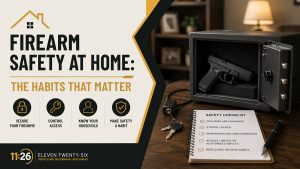
- Secure storage around children, visitors, and unauthorized users
- Conflict avoidance, verbal de-escalation, and emergency communication
- A written examination or certificate requirement
- A range qualification with state-defined distances, targets, or scoring
The exact curriculum belongs to the jurisdiction and instructor. A course advertised as “CCW” may be a legal-compliance class with minimal coaching, whereas a defensive handgun class may require prior experience and spend most of its time on supervised practice.
Typical time allocation
| Course type | Classroom time | Range time | Typical total | Main outcome |
|---|---|---|---|---|
| Introductory handgun lesson | 2-4 hours | 1-2 hours | 3-6 hours | Safe operation and basic marksmanship |
| Basic permit course | 4-6 hours | 2-3 hours | 6-9 hours | Certificate and qualification |
| Regulated state course | 10-14 hours | 2-4 hours | 12-16 hours | Statutory training completion |
| Private coaching session | 1-2 hours | 1-2 hours | 2-4 hours | Individual skill correction |
| Defensive follow-on class | 3-6 hours | 4-8 hours | 8-16 hours | Carrying, movement, judgment, and practice |
Typical figures vary by state, range policy, class size, and whether the instructor supplies firearms. A high classroom percentage is not automatically a weakness when the jurisdiction requires substantial legal instruction, but a class that promises defensive readiness without supervised practice deserves skepticism.
How Do You Choose the Right Training Path?
Choose training by matching the course to your legal requirement, current handling ability, and intended carry habits. The most important distinction is whether you need a certificate, foundational firearm instruction, or continuing defensive development.
| Student situation | Recommended first step | Follow-on training | Why this sequence fits |
|---|---|---|---|
| Never handled a handgun | Introductory handgun lesson | Permit course after safe handling is consistent | Reduces cognitive load during qualification |
| Recreational target shooter | State-approved permit course | Defensive handgun coaching | Adds law, concealment, and decision-making |
| New permit holder | Permit course and supervised range practice | Monthly or quarterly skills sessions | Builds safe repetition after certification |
| Daily carrier | Permit-compliant course | Scenario, medical, and retention training | Addresses clothing, environment, and emergencies |
| Returning owner after years away | Refresher handling lesson | Current permit course if required | Rebuilds habits before live fire |
| Person uncertain about carrying | Legal consultation and introductory lesson | Decision after storage and lifestyle review | Tests whether the responsibility fits daily life |
A beginner should not feel pressured to start with a holstered live-fire class. Safe handling, unloaded manipulation, and basic marksmanship should become predictable before adding concealment or time pressure. An experienced shooter should not assume accurate bullseye groups equal defensive readiness, because legal judgment and safe carry habits require separate instruction.
What should you bring to class?
Bring government identification, confirmation of registration, eye and ear protection, water, a notebook, and only the firearm and ammunition that the instructor or range permits. Ask in advance whether the class supplies a handgun, whether ammunition must be factory-new, whether a belt and holster are required, and whether magazines must be unloaded on arrival.
Do not arrive with a loaded firearm unless the facility’s written policy specifically permits it. Follow the instructor’s transport instructions, use a case, and keep the firearm pointed in a safe direction during every administrative handling task.
How Much Does Concealed Carry Training Cost?
A basic concealed carry course commonly costs $50-$150, while advanced defensive instruction often costs $175-$300 or more. The complete permit budget frequently reaches $100-$400 after ammunition, range charges, fingerprints, photographs, and application fees are included.
| Expense | Typical range | When paid | Cost-control question |
|---|---|---|---|
| Basic in-person course | $50-$150 | Registration | Does tuition include qualification? |
| Advanced defensive class | $175-$300+ | Registration | Is prior experience required? |
| Online or hybrid theory | $20-$85 | Registration | Does the state accept remote coursework? |
| Ammunition | $20-$50 per box | Class or range day | How many rounds does the syllabus require? |
| Range fee | $15-$40 per hour | Range visit | Is lane time included in tuition? |
| Fingerprinting | $50-$100 | Application stage | Does the state use a specific vendor? |
| Permit application | $20-$200 | Filing | Is renewal priced separately? |
A practical budget example is $100 for tuition, $35 for ammunition, $25 for range use, $75 for fingerprints, and $75 for the application, totaling $310. That example is typical rather than universal. State agencies, instructors, and ranges publish the controlling prices.
Online training can reduce tuition but may create a false economy if the licensing authority rejects it. Verify the current requirement through the state police, attorney general, licensing bureau, or official permit portal before paying for a remote course.
What Equipment Is Required?
A beginner generally needs a reliable handgun, factory-approved ammunition, rigid eye and ear protection, and a holster that fully covers the trigger guard. Equipment should support safe handling before it supports concealment, speed, or appearance.
| Equipment | Minimum characteristic | Typical selection point | Common failure |
|---|---|---|---|
| Handgun | Functional, mechanically suitable, legally compliant | Fit the user’s hands and training plan | Choosing a model before learning basic operation |
| Holster | Rigid, trigger-guard coverage, secure retention | Specific to the exact firearm model | Soft or loose material allowing trigger access |
| Belt | Supports holster weight without collapse | Stiffness matched to the setup | Ordinary fashion belt shifting during movement |
| Eye protection | Full-time range use | Clear lenses with side coverage | Removing it during loading or inspection |
| Hearing protection | Earplugs, muffs, or both | Fit tested before firing | Poor seal causing discomfort or hearing risk |
| Magazine carrier | Secure, unobstructed retention | Optional for initial qualification | Adding gear before handling is consistent |
| Storage device | Locked, access-controlled container | Match household access risks | Leaving the firearm accessible when unattended |
A holster should be tested with the firearm unloaded and the action verified safe. Check that the handgun cannot fall out during ordinary movement and that clothing, straps, drawstrings, or objects cannot enter the trigger guard.
What handgun should a beginner carry?
The best beginner handgun is the model the owner can safely operate, control, maintain, and carry consistently within applicable law. A smaller pistol may conceal easily but can be harder to grip and control, while a larger pistol may shoot comfortably but impose more clothing and belt demands.
Do not select a firearm solely by caliber, advertising, or social-media recommendations. Rent or handle legal options at a supervised range, compare grip reach and control access, and ask an instructor to assess whether the user can load, unload, rack, and safely store the model.
What Happens During the Permit Process?
The permit process normally moves from eligibility verification to approved training, qualification, fingerprints or background review, and application submission. The order differs by state, and some jurisdictions require an application before training or impose certificate expiration dates.
Step 1: Verify eligibility
Read the current state statute and agency checklist before registering. Common requirements include minimum age, residency or lawful presence, criminal-history restrictions, protection-order restrictions, and conditions involving certain substance use or adjudicated mental-health records.
Federal restrictions and state licensing rules overlap but are not identical. A person should obtain qualified legal advice for a personal eligibility question instead of relying on an instructor’s informal opinion.
Step 2: Confirm the course is accepted
Verify the instructor’s certification, course approval, insurance, certificate format, and expiration period. Ask which agency accepts the credential and whether the course covers the exact permit type being requested.
Step 3: Complete classroom instruction
Bring questions about storage, vehicle transport, prohibited locations, private-property rules, notification requirements, and use-of-force standards. Laws can change, and an old handout may not match the current statute or administrative rule.
Step 4: Complete the range qualification
Follow all range commands, keep the firearm pointed safely, and keep the trigger finger indexed until the instructor directs otherwise. Qualification distances commonly fall between 3 and 15 yards, but the required target, round count, time limit, and passing score belong to the jurisdiction.
You will know this step is complete when the instructor records a passing result and gives you the required documentation. A failed qualification usually calls for additional instruction and a scheduled retest, not rushed extra shooting or unsafe handling.
Step 5: Submit fingerprints and background materials
Use the fingerprint vendor, form, photograph specification, and identification documents named by the licensing agency. Retain receipts and copies because processing delays often result from missing or mismatched paperwork rather than training performance.
Step 6: File the application and track renewal
Submit the certificate, application, fee, fingerprints, and other required documents through the authorized channel. Record the submission date, permit expiration date, renewal window, and any continuing-training requirement.
Which Course Format Should You Choose?
In-person instruction is the safest default for beginners because an instructor can observe handling, correct unsafe movement, and supervise live fire. Online coursework may efficiently deliver legal information, but it cannot replace hands-on firearm coaching or satisfy every state’s licensing requirement.
| Format | Typical cost | Typical duration | Best use | Main limitation |
|---|---|---|---|---|
| In-person permit course | $50-$150 | 4-9 hours | Initial licensing | May provide limited individual coaching |
| Online theory course | $20-$85 | 2-8 hours self-paced | Accepted classroom component | No live safety oversight |
| Hybrid course | $40-$150 | 4-10 hours | Remote theory plus range session | State acceptance varies |
| Private instruction | $75-$150 per hour | 2-4 hours | Skill correction and equipment fitting | Higher total cost |
| Defensive follow-on course | $175-$300+ | 8-16 hours | Continuing proficiency | Requires prior safe handling |
Treat “online CCW certification” advertisements carefully. A completion screen is not automatically a state-recognized credential, and no remote lesson can verify muzzle direction, trigger-finger position, holster security, or safe unloading technique.
What Legal Boundaries Must Carryers Understand?
A permit does not authorize force whenever a person feels afraid, angry, or insulted. Lawful defensive force generally turns on an immediate threat, proportionality, necessity, and the specific jurisdiction’s rules, while the details differ substantially among states.
Students should learn the following before carrying:
- Where firearms are prohibited by statute, regulation, or posted private-property policy
- Whether schools, courthouses, government buildings, hospitals, alcohol-serving venues, or public events have special restrictions
- Whether vehicle carry has separate storage or access rules
- Whether the state requires notification during a law-enforcement encounter
- Whether a permit changes transport rules or only authorizes concealed carry
- How reciprocity depends on the destination state, permit type, and current agreement
- Whether local ordinances impose additional restrictions
- How to respond when a private property owner asks the carrier to leave
Official state police, attorney general, and licensing-agency websites should control legal research. Commercial reciprocity maps are useful starting indexes but should not be the final authority, because statutes and administrative interpretations change.
How Should a Firearm Be Stored and Carried Safely?
A carried handgun should remain secured in a purpose-built holster, while an unattended firearm should be locked against unauthorized access. Storage decisions must account for children, guests, roommates, vehicles, and anyone who may handle the firearm without permission.
The holster must cover the trigger guard completely and retain the firearm during normal walking, sitting, and bending. A loaded firearm should never be placed loose in a bag, glove compartment, nightstand, or clothing pocket.
At home, use a quick-access locked container only when the owner can operate it reliably and the device prevents access by unauthorized people. For transport, follow state law and the vehicle owner’s policy; a locked container separate from unauthorized access may be required or advisable.
Expert insight: concealment is a consistency problem
Printing is less important than repeated touching, adjustment, or checking. A carrier who constantly manipulates the holster attracts more attention and creates more handling opportunities, so equipment should be tested unloaded at home with ordinary sitting, walking, and bending before public carry.
Expert insight: smaller is not automatically easier
A compact handgun can be easier to conceal but harder to operate because its shorter grip and lighter weight increase recoil and reduce usable control surface. The practical selection rule is simple: choose the smallest setup that the user can safely control and accurately operate under instructor supervision.
What Common Beginner Mistakes Need Correction?
Most beginner errors involve administrative handling, equipment fit, unrealistic expectations, or neglected maintenance rather than inability to hit a target. Correct the process before increasing speed, distance, ammunition consumption, or equipment complexity.
| Mistake | Why it happens | Corrective action | Verification |
|---|---|---|---|
| Finger enters trigger guard early | Anticipation or poor habit | Practice unloaded indexing under supervision | Finger remains high until the firing decision |
| Holster shifts or exposes the grip | Weak belt or poor fit | Replace with model-specific rigid equipment | Holster stays fixed during normal movement |
| Constantly checks concealment | Anxiety about printing | Test clothing and fit while unloaded | No repeated public adjustment |
| Carries without maintenance | Lint and sweat accumulate | Follow manufacturer cleaning guidance | Controls operate and chamber area is clear |
| Treats qualification as mastery | Certificate creates overconfidence | Schedule continuing lessons | Safe handling remains consistent months later |
| Practices dry fire with live ammunition nearby | Poor room control | Remove all ammunition from the room | Separate inspection confirms a sterile practice area |
Dry-fire practice should occur only when the firearm is unloaded, ammunition is outside the practice area, the intended direction is safe, and the manufacturer permits the activity. Use an instructor to establish a simple routine before practicing manipulations at home.
Do not practice drawing from concealment with a loaded firearm without qualified coaching and an appropriate training environment. Speed is a later training variable. Safety and decision quality come first.
What If You Cannot Meet the Qualification Standard?
If you fail a range qualification, stop and ask the instructor to identify the specific problem before attempting another string of fire. Common causes include poor grip, visual focus, trigger movement, unfamiliar controls, excessive recoil, or anxiety caused by an overly fast pace.
A sound recovery plan includes:
- Confirm the score, distance, target, and exact failed stage.
- Ask for a supervised diagnosis using an unloaded firearm first.
- Reduce complexity and rebuild stance, grip, sight alignment, and trigger control.
- Practice at an appropriate pace with legal, instructor-approved ammunition.
- Schedule the retest according to state and range rules.
- Replace or adjust equipment only when the instructor identifies equipment as the cause.
Never conceal a handling problem to finish a class. A delayed certificate is safer than carrying a firearm with unreliable habits.
How Often Should You Practice After Certification?
New permit holders should schedule a supervised follow-up session within 30-90 days, then maintain practice at an interval that preserves safe handling and local qualification requirements. The appropriate schedule depends on experience, access to a range, physical changes, equipment changes, and how often the firearm is carried.
A practical continuing plan may include:
- Monthly unloaded safety and storage review
- Monthly or every-other-month live-fire practice when feasible
- Seasonal clothing and holster checks
- Annual legal review using official state materials
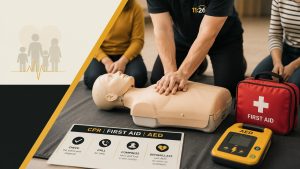
- Annual first-aid or Stop the Bleed training
- Periodic instructor review after changing firearms, optics, holsters, or carry position
Live fire is only one component. A person also needs judgment, communication, emergency planning, and a realistic understanding of what carrying changes in daily routines.
What happens after a defensive incident?
After any defensive firearm use, prioritize immediate safety, call emergency services, request medical assistance, identify yourself as the reporting party when safe, and follow dispatcher instructions. Do not chase a person, handle unnecessary objects, or speculate about facts before speaking with qualified counsel.
Law-enforcement procedures vary, and a permit does not create immunity from investigation. A reputable instructor can explain general post-incident priorities, but personalized legal advice should come from a licensed attorney familiar with the jurisdiction.
The Bottom Line
Concealed carry training basics begin with safe firearm handling and state-approved legal instruction, then extend into supervised range practice, secure storage, equipment fitting, conflict avoidance, and continuing education. A basic course may take 4-8 hours and cost $50-$150, but a realistic permit budget often reaches $100-$400 after ammunition, range, fingerprinting, and application fees.
Verify the current rules with the licensing authority before enrolling, choose an instructor who corrects handling rather than merely issuing certificates, and treat qualification as a baseline. The safest carry plan is the one that combines lawful eligibility, reliable equipment, consistent practice, secure storage, and the discipline to avoid unnecessary confrontations.
Frequently Asked Questions
Is concealed carry training required in every state?
No. States differ between permitless carry, shall-issue licensing, may-issue systems, and training mandates. Even where a permit is not required for some adults, training may still be legally necessary for reciprocity, certain locations, or specific permit types. Confirm the current rule through the state licensing agency rather than an instructor advertisement.
Can I use a different handgun during the qualification?
Sometimes, but the answer depends on state rules and the instructor or range policy. A qualification may apply to a permit rather than a particular firearm, while some jurisdictions or programs impose weapon-type restrictions. Qualify with the handgun you can safely operate and intend to carry, if the rules allow that choice.
Is a concealed carry permit valid in another state?
A permit may be recognized by another state, but recognition is called reciprocity and is never automatic nationwide. Destination-state rules can govern prohibited places, vehicle transport, notification, age, and magazine or firearm restrictions. Check the destination’s official government source immediately before travel.
Should I carry with a round in the chamber?
The answer depends on the firearm design, manufacturer instructions, holster quality, training, and applicable law. A person should not carry in a configuration they cannot safely load, unload, holster, and store. Ask a qualified instructor to evaluate the complete firearm-and-holster system before choosing a carry condition.
How long does a concealed carry certificate remain valid?
Certificate validity varies by jurisdiction and course provider. Some states accept a certificate only for a limited period after completion, while others do not impose a short certificate deadline. Ask the licensing agency whether the document expires before filing and retain the original paperwork for renewal records.
What should I do if I am uncomfortable carrying a firearm?
Pause the process and take an introductory safety lesson or legal consultation before carrying in public. Discomfort can reveal an equipment, knowledge, storage, or decision-making gap that training can address. No permit requires a person to carry every day, and choosing not to carry is safer than carrying without confidence or preparation.