Concealed carry training requirements are state-specific rules governing the education, firearm qualification, and documentation needed for a concealed handgun permit. Requirements may include an approved course, classroom instruction, live fire, a written examination, fingerprints, and fees, while permitless-carry states may impose no training prerequisite for lawful carry.
Key Facts at a Glance
- No single federal concealed carry training standard applies in all 50 states.
- A state may require a permit course even when it allows permitless concealed carry.
- Online coursework alone is valid only when the issuing state expressly accepts it.
- Typical total first-time costs range from approximately $120 to $500, excluding firearm and safe-storage purchases.
- A permit does not automatically authorize carry in every state or location.
- The issuing state’s current website, statute, and administrative rules control over a national training website.
What Does Concealed Carry Training Usually Require?
Concealed carry training usually requires instruction in firearm safety, storage, state firearms law, defensive-force law, and responsible handling, followed by a practical qualification when the state mandates one. The exact course length can range from a few hours to 16 hours or more, and some states require classroom and range components separately.
The training certificate is evidence that an applicant completed a prescribed course. It is not a nationwide license, a finding that the applicant is a competent defensive shooter, or legal authorization to carry in restricted places.
Common subjects include:
- The four basic firearm-safety rules
- Loading, unloading, and safe transport
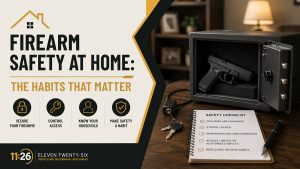
- Storage around children and unauthorized users
- State definitions of concealed carry
- Deadly-force standards and imminent threats
- Duty to retreat, where applicable
- Defensive display and brandishing laws
- Prohibited locations and private-property rules
- Cleaning, maintenance, and ammunition selection
- Basic shooting fundamentals and qualification standards
The legal component deserves equal weight with marksmanship. A person can pass a paper target qualification and still misunderstand when force is unlawful, what happens after a defensive shooting, or whether a courthouse, school, airport area, or posted private business prohibits firearms.
How Do Permit Rules Differ From Permitless Carry?
Permitless carry removes a permit requirement in certain circumstances; it does not erase age limits, prohibited-person rules, location restrictions, self-defense law, or restrictions on carrying while impaired. Permitless-carry statutes also differ regarding vehicle carry, loaded firearms, establishments serving alcohol, and reciprocity.
The phrase “constitutional carry” is not a reliable substitute for reading the statute. Some states allow permitless concealed carry only for adults above a specified age, while others retain separate rules for public buildings, college campuses, or local government facilities.
A permit can still offer practical advantages in a permitless state, including:
- Recognition by states that honor the particular permit
- A standardized way to demonstrate authorization while traveling
- Possible advantages in firearm-purchase procedures where state law provides them
- Access to a formal training and renewal framework
Those advantages vary. A permit does not override the destination state’s laws, and a state may recognize only resident permits, only permits issued to people above a certain age, or only permits meeting specified training standards.
Who Sets the Training Requirement?
The state legislature creates the legal framework, while an issuing agency administers applications, instructor approval, qualification standards, and permit records. Depending on the state, that agency may be a state police department, department of public safety, sheriff’s office, county clerk, or another designated authority.
Applicants should verify five items before paying for a course:
- The exact permit name, such as CCW, CHP, LTC, or wear-and-carry permit.
- The current minimum age and eligibility rules.
- Whether the instructor’s credential is recognized.
- Whether online or hybrid education is accepted.
- Whether the certificate expires before the application is filed.
A commercial course page can be outdated even when the instructor is reputable. Search the official state agency using terms such as “concealed handgun permit training requirements” and compare the agency’s checklist with the instructor’s syllabus.
What Eligibility Issues Can Prevent Approval?
Disqualifying issues commonly include felony convictions, certain domestic-violence misdemeanors, active protection orders, unlawful drug use, fugitives status, specific mental-health adjudications, and other conditions defined by state or federal law. The exact effect of a conviction often depends on the offense, disposition, jurisdiction, and restoration of rights.
Age rules also vary. Twenty-one is common for a permit, but some states provide narrower pathways for applicants aged 18 to 20, military members, or people with particular credentials. A military or law-enforcement background may satisfy part of a training requirement, but it does not automatically remove every application condition.
Do not rely on an instructor’s informal opinion about a criminal record. Review the issuing agency’s eligibility guidance and obtain advice from a qualified firearms attorney when a record, protective order, psychiatric commitment, immigration status, or citizenship issue may affect eligibility.
What Does a Concealed Carry Course Include?
A qualifying course normally combines safety and legal instruction with a practical demonstration of firearm handling. The practical standard may require a specific number of rounds, distances, positions, time limits, or minimum score, but those details are set by state rule rather than by a national curriculum.
A responsible course should explain the difference between training for a permit and training for real-world defensive competence. Permit qualification is often a basic handling test, not a complete evaluation of drawing from concealment, movement, decision-making, communication, or stress performance.
Classroom Subjects
Classroom instruction commonly addresses:
- Firearm nomenclature and operating controls
- Safe loading, unloading, and administrative handling
- Storage, transportation, and child access prevention
- State carry, purchase, transfer, and reporting laws
- Use-of-force statutes and relevant case concepts
- Alcohol, drugs, medication, and firearm possession
- Restricted locations and signage
- Contact with law enforcement
- Post-incident responsibilities and legal counsel
- Civil liability and insurance limitations
In District of Columbia v. Heller (2008), Justice Antonin Scalia wrote that “like most rights, the right secured by the Second Amendment is not unlimited.” That statement does not answer a state’s training question, but it illustrates why constitutional language cannot replace the statute governing a specific permit or location.
Range and Qualification Subjects
Where live fire is required, students may demonstrate:
- Safe muzzle direction and trigger-finger discipline
- Loading and unloading under supervision
- Basic grip, stance, sight alignment, and trigger control
- Accuracy from specified distances
- Safe response to a cease-fire command
- Fault recognition and controlled stoppage procedures
Many state qualifications use a serviceable handgun and a paper target at short-to-moderate distances. That test may confirm basic accuracy, but it does not prove that a person can safely draw from a particular holster while wearing winter clothing. Additional defensive training should be treated as a separate competency goal.
Which Course Format Fits the Applicant?
In-person training is the safest default for beginners because an instructor can correct unsafe handling immediately. Hybrid instruction can work for experienced students only when the state accepts the online portion and the student completes all required hands-on work; private instruction offers customization but costs more and may reduce exposure to questions raised by other students.
| Format | Typical duration | Typical tuition | Best fit | Main limitation |
|---|---|---|---|---|
| In-person block | 6-16 hours | $75-$350 | New firearm owners | Fixed schedule and compressed pace |
| Hybrid course | 3-8 online hours plus 2-8 in-person hours | $100-$300 | Experienced shooters with limited time | Online completion may be invalid in some states |
| Private instruction | 2-6 hours initially | $95-$200 per hour | Students needing individual coaching | Higher cost and no guaranteed permit approval |
| Basic pistol prerequisite | 4-8 hours | $75-$250 | First-time handgun owners | Does not itself satisfy every permit rule |
A private lesson is particularly useful for safe handling, fit, and equipment selection. It is not a substitute for an approved permit course unless the issuing state expressly recognizes that instructor and curriculum.
Is Online Concealed Carry Training Valid?
Online concealed carry training is valid only if the relevant state permits online education and the course meets its approval requirements. A generic certificate from a national website may be rejected if the state requires an approved instructor, in-person attendance, live fire, identity verification, or a particular curriculum.
Before enrolling, confirm:
- The state accepts online or hybrid completion.
- The provider is approved for the exact permit.
- An in-person instructor verifies identity and skills when required.
- A live-fire qualification is included if required.
- The certificate contains the required applicant and instructor information.
- The certificate remains current when the application is submitted.
Never assume that a course accepted in one state transfers to another. New Mexico, Maryland, Illinois, California, and other states have distinct standards that can change through legislation or agency rulemaking.
How Long Does the Process Take?
The training portion typically takes 4-16 hours, while the full permit process can take several weeks to several months because fingerprinting, background checks, agency workload, and statutory deadlines differ. Renewal periods commonly fall between two and five years, but both expiration and renewal-training rules are state-specific.
| Process stage | Typical time | Typical direct cost | Applicant checkpoint |
|---|---|---|---|
| Eligibility review | 30-90 minutes | $0-$100 for legal advice | No unresolved disqualifying issue |
| Approved class | 4-16 hours | $75-$350 | Correct certificate issued |
| Range qualification | 1-4 hours | $25-$100 | Required score or safe completion |
| Fingerprinting | 15-45 minutes | $25-$100 | Receipt or tracking number retained |
| Application submission | 30-90 minutes | $20-$200 | Complete packet and payment |
| Agency processing | 2 weeks-6 months | Usually included | Status monitored through official portal |
These are typical planning ranges, not promises. A state can impose a different fee, require an appointment, reject a stale certificate, or take longer when records need manual review.
What Will the Permit Process Require After Training?
After training, the applicant generally submits the certificate with an application, identity documents, fingerprints, photographs when required, and the government fee. Some jurisdictions accept online applications, while others require an appointment with a sheriff, police department, licensing office, or state agency.
Step 1: Verify the Official Checklist
Identify the issuing authority for the address where the applicant resides. Read the current checklist, application instructions, disqualifier rules, payment options, and certificate-validity period.
Step 2: Complete the Correct Course
Use an instructor whose state credential and course name match the permit application. Ask whether the course includes range ammunition, eye and ear protection, a written exam, and a requalification policy.
Step 3: Complete Fingerprints and Required Records
Use the fingerprint vendor specified by the agency when one is named. Keep the receipt, transaction control number, appointment confirmation, and a scanned copy of every submitted document.
Step 4: Submit the Application Promptly
File before the training certificate expires. Check every answer, because an incomplete or inconsistent application can create delays even when the applicant is otherwise eligible.
Step 5: Track the Application
Use the official status portal or agency contact method. Keep duplicate records rather than sending original documents that cannot be replaced easily.
Step 6: Read the Permit and Conditions
Confirm the name, expiration date, permit number, and any restrictions. A physical permit does not eliminate the need to follow destination-state law.
What Should You Bring to Class and the Range?
Bring government-issued identification, the required handgun if the instructor permits personal firearms, factory ammunition of the correct caliber, eye and ear protection, a secure case, and clothing that allows safe movement. The instructor or range may impose stricter equipment rules, so obtain a written list before arrival.
A practical preparation checklist includes:
- Unloaded handgun in a closed case
- Two or more functioning magazines, if applicable
- 50-200 rounds of approved ammunition, depending on the course
- Eye and double hearing protection
- Small notebook and pen
- Water, food, and prescribed medication
- Comfortable clothing and closed-toe shoes
- A rigid holster only if the instructor authorizes draw practice
- No loaded firearm in the classroom unless the facility expressly permits it
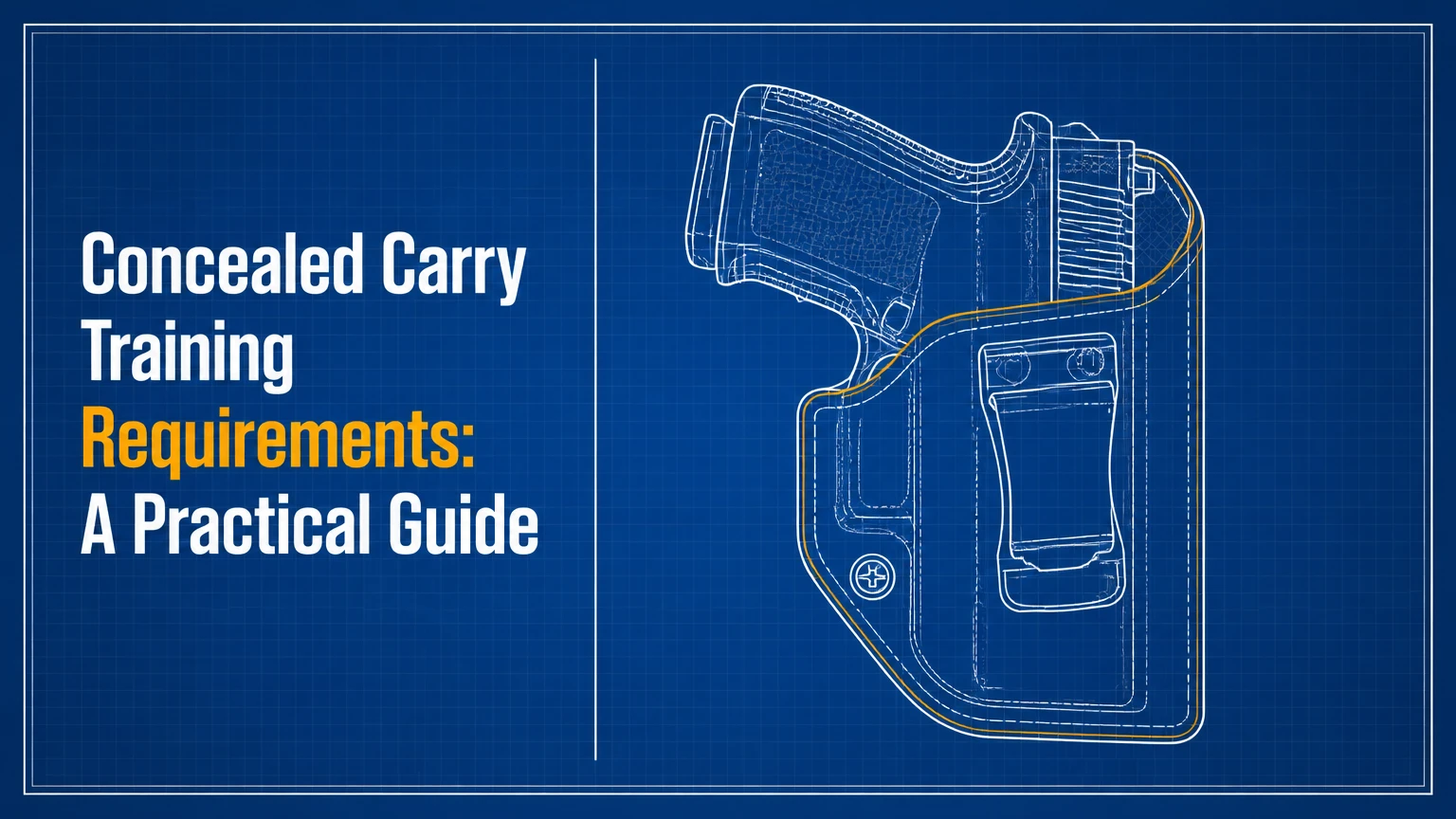
Beginners should not buy a holster solely because an advertisement calls it tactical. A holster should cover the trigger guard, retain the firearm, remain attached during normal movement, and fit the specific firearm. Off-body carry creates additional control and access problems and should not be treated as a beginner shortcut.
How Much Do Concealed Carry Classes Cost?
A typical first-time applicant should budget approximately $120-$500 for tuition, ammunition, range expenses, fingerprints, and the application fee, although highly regulated jurisdictions and private training can exceed that range. The firearm, secure storage, practice ammunition, defensive ammunition, and legal consultation are separate expenses.
| Expense | Typical range | When charged | Cost-control decision |
|---|---|---|---|
| Permit course | $75-$350 | Enrollment | Compare approved instructors |
| Ammunition | $25-$120 | Range day | Confirm caliber and round count |
| Range and targets | $15-$75 | Practical session | Ask whether tuition includes fees |
| Fingerprinting | $25-$100 | Application | Use the mandated vendor |
| Government application | $20-$200 | Submission | Verify current fee schedule |
| Private remedial lesson | $95-$200 per hour | If needed | Practice fundamentals first |
A low advertised class price can exclude ammunition, fingerprinting, range fees, and application charges. Compare the complete out-of-pocket total, not tuition alone.
How Should Applicants Compare Course Quality?
The strongest course is the one that is legally accepted, safety-focused, transparent about practical standards, and appropriate to the student’s current skill level. A certificate from a short course is not valuable if the issuing agency rejects it, and a technically valid course may still be inadequate for a novice who cannot safely operate the handgun.
| Evaluation criterion | Minimum question | Stronger indicator |
|---|---|---|
| State approval | Is the instructor recognized by the issuing agency? | Credential number appears in official records |
| Practical training | Is live fire required or offered? | Instructor observes each student individually |
| Legal content | Which statutes and locations are covered? | Materials identify current state provisions |
| Student ratio | How many students attend? | Approximately 4-8 students per instructor on range |
| Equipment policy | Are holsters and ammunition specified? | Written safety and equipment rules arrive before class |
| Remediation | What happens after a failed qualification? | Documented retest or private coaching policy |
What Is the Biggest Mistake New Applicants Make?
The most consequential beginner mistake is treating permit qualification as a complete concealed-carry education. A short qualification can verify basic accuracy, but it may not address safe storage, clothing changes, defensive decision-making, communication with police, or the legal consequences of displaying a firearm.
The second common mistake is selecting equipment before learning safe handling. A compact pistol, belt, holster, and ammunition combination should be evaluated for reliable operation and safe control, not purchased from a checklist detached from the user’s hand size, clothing, mobility, and storage plan.
What Happens If the Applicant Fails?
A failed shooting qualification usually means the applicant must follow the instructor’s retest policy or repeat the course, but the legal consequence depends on state rules and the provider’s procedures. The applicant should not repeatedly attempt the test without identifying whether the problem is grip, trigger control, vision, loading procedure, or unsafe handling.
Use this recovery sequence:
- Ask the instructor to identify the exact failed standard.
- Separate safety failures from accuracy failures.
- Take a fundamentals lesson before purchasing specialized gear.
- Confirm whether the certificate remains valid after a failed attempt.
- Obtain written retest instructions and any additional fee.
- Do not carry until the permit is valid and all legal conditions are met.
An applicant whose background check is delayed or denied should request the agency’s formal reason and appeal procedure. Expungement or restoration of rights may help in some cases, but neither is automatic, and legal advice should come from an attorney in the relevant jurisdiction.
What Are the Travel and Reciprocity Risks?
Reciprocity is a state-to-state recognition arrangement, not a nationwide carry license. Before crossing a border, verify the destination state’s official recognition list, age rules, vehicle rules, prohibited locations, magazine or firearm restrictions, notification duties, and whether the destination recognizes a nonresident permit.
Travelers should also distinguish transport from carry. Federal transportation protections under 18 U.S.C. § 926A concern certain interstate transportation conditions and do not create a general right to carry a loaded concealed handgun in every state.
A sensible travel record includes:
- Home-state permit and identification
- Destination-state statute or official reciprocity page
- Current restricted-location list
- Firearm and magazine compliance notes
- Secure-transport plan for prohibited locations
- Contact information for a local attorney if the trip is high risk
Nonresident permits from places such as Florida or Utah may expand recognition in some states, but they can fail to provide the expected benefit when a destination recognizes only resident permits or applies separate age restrictions. Verify each state independently.
What Changes When You Move or Let the Permit Expire?
Moving can terminate a resident permit, require a new application, or change eligibility for a nonresident permit. Allowing a permit to expire can also remove carry authority immediately, create a renewal gap, or require a new training certificate rather than a simplified renewal.
Report address changes when the issuing authority requires it. Before moving, check whether the new state recognizes the old permit, whether the old state keeps the permit active after relocation, and whether the new state requires resident training.
Permit renewal is not always a repeat of the original process. Some states require refresher instruction, while others require only an application, updated fingerprints, or a fee. Never carry on the assumption that a pending renewal preserves authorization.
Frequently Asked Questions
Can I take concealed carry training before buying a handgun?
Yes, many courses allow students to attend before purchasing a handgun, and rental firearms can help with safe familiarization where the range permits them. Confirm the course’s caliber, firearm, and ammunition rules first. A basic pistol class may be more appropriate than a permit course for someone who has never loaded or operated a handgun.
Do I need a permit if my state has permitless carry?
Not necessarily, but permitless carry does not remove other restrictions or create reciprocity. A permit may provide recognition in other states or other state-law benefits. The correct answer depends on age, location, firearm type, vehicle use, criminal history, and the specific permitless-carry statute.
Can military or law-enforcement experience replace the required class?
Sometimes. States may accept qualifying military records, law-enforcement credentials, or prior permits as evidence of training, but the waiver conditions differ. The applicant must submit the exact documentation required by the issuing agency, and experience does not necessarily waive fingerprints, fees, background checks, or legal restrictions.
Is a shooting qualification the same as defensive firearms training?
No. A shooting qualification is a legal permit requirement when the state uses one, while defensive firearms training develops broader skills such as safe presentation from concealment, decision-making, movement, communication, and post-incident conduct. A permit certificate should never be treated as proof of complete defensive readiness.
Can I carry in a business that has a no-firearms sign?
The answer depends on state law, the sign’s wording and placement, and whether the location is otherwise restricted. Some states make properly posted signs enforceable, while others treat a violation as trespass or require an individual warning. Check the destination state’s rules before entering with a firearm.
How often should I train after receiving a permit?
A practical baseline is several supervised or structured practice sessions each year, with additional work after changing firearms, holsters, ammunition, or clothing. Permit renewal intervals do not measure skill retention. Safe dry practice, live-fire fundamentals, and periodic legal review address different risks and should not be collapsed into one annual class.
The Bottom Line
Concealed carry training requirements depend on the issuing state, the applicant’s eligibility, the permit type, and whether live fire or an approved instructor is required. Start with the official agency checklist, verify the course before paying, budget for the full application, and treat permit qualification as a legal minimum rather than a complete defensive-training program. Recheck every destination state before carrying across a border.