Most firearm accidents happen in the home, and most of them are preventable with habits that take seconds to build. The Eleven Twenty Six Elite Training Academy teaches firearm safety as the foundation of its catalog, and the same principles apply at the kitchen table as on the range. The four rules are where it starts.
The Four Rules, Everywhere
The rules are simple enough to remember and strict enough to save lives: treat every firearm as loaded, never point a firearm at anything you are not willing to destroy, keep your finger off the trigger until the sights are on target, and know your target and what is beyond it. The academy teaches these rules in every course because they transfer to every environment. At home, they are the difference between a habit and an accident.
Storage Is a Family Decision
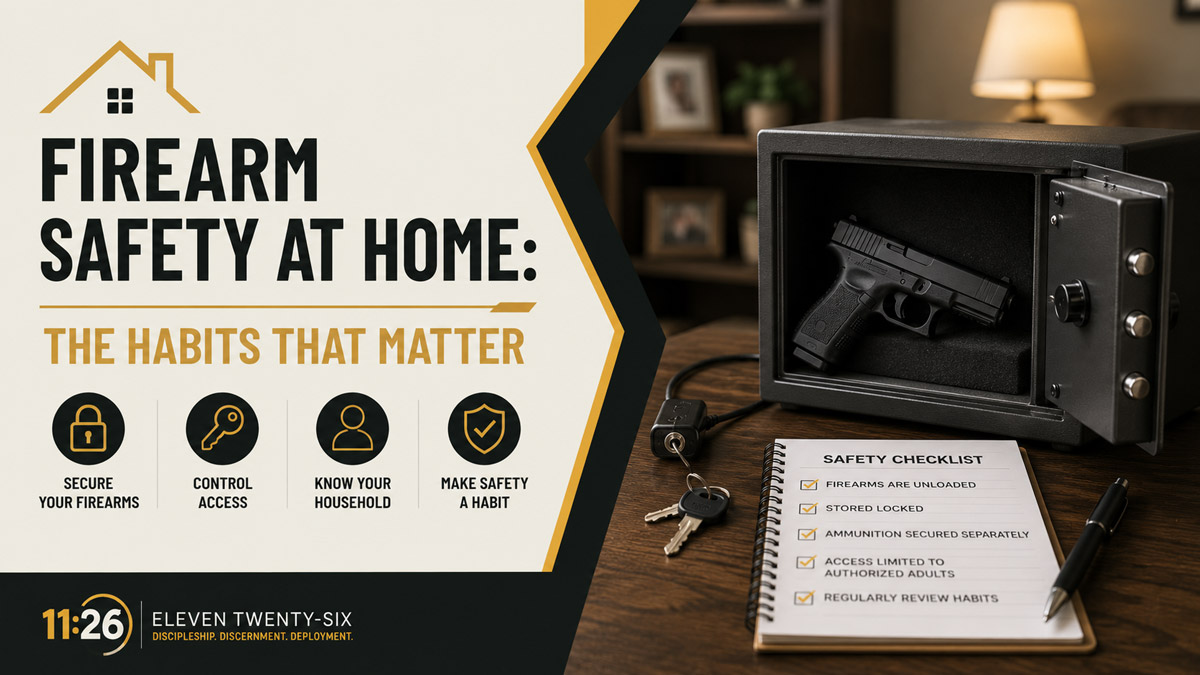
Storage is where the home conversation gets real. The right answer depends on the household: who is in the house, what ages, what access is appropriate, and how quickly a firearm needs to be available. Options range from locked cases and safes to quick-access products for the responsible adult. The key is that the decision is made deliberately, with the household in mind, and the academy’s safety course covers the storage discussion tailored to the student’s situation.
The Curiosity Question
If there are children in the home, the conversation cannot stop at locks. The academy offers youth firearm safety training because curiosity is normal and education is the answer. The child who is taught the rules by a parent or an instructor is safer than the child who is left to discover a locked case alone. The youth course teaches the rules at the right level, including what to do when a firearm is found: stop, do not touch, leave the area, and tell an adult.
The Handling Habits
At home, the handling habits matter as much as the storage. A firearm is checked and cleared when it is picked up, even if the owner knows it is empty. Cleaning and inspection happen with the same discipline as the range. Ammunition is stored separately from the firearm when that fits the household plan. These are small motions that become automatic, and automatic is what safety is.
The Communication Habit
The household should be on the same page. That means naming the storage plan, the access rules, and the emergency numbers. The family that has talked about the plan is the family that can act on it. The academy’s courses include these conversations because the training is only as good as the habits that follow it home.
The Maintenance Connection
Safety and maintenance are the same discipline. A firearm that is cleaned and inspected is a firearm whose condition is known, and knowing the condition is part of handling it safely. The shooting classes at the academy cover firearm maintenance basics, which is the range-side version of the home habit.
The Honest Boundary
No habit makes a firearm risk-free, and no storage device replaces supervision. The honest version of the home safety conversation is layered: the rules, the storage, the education, and the communication. Each layer makes the next one stronger, and the academy’s catalog builds the same layers for the student and the family.
The Routine Check
The layered plan works best when it is checked. A monthly habit that confirms the storage, the locks, and the ammunition are where they should be keeps the plan honest. The check takes minutes and it catches the small drift that accidents hide in. The academy’s safety course teaches the plan; the routine is what keeps the plan true.
The Training Follow-Through
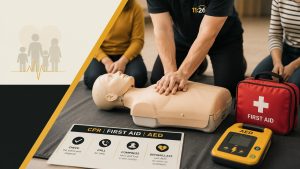
The safety conversation at home pairs naturally with the youth course and the family’s other training. The academy’s catalog makes the follow-through easy: the same team teaches the adult safety course, the youth safety course, and the medical training that belongs in every home. The family that trains together builds the same safety language, and that language is what the habits run on.
Related Reading
- Your first concealed carry class
- Firearm safety at home
- Why CPR and first aid training belongs on every family’s list
Call about safety training to the academy.